Full-Arch Dental Implant Restoration in Milford, CT
When most or all of the teeth in your upper or lower jaw are missing, severely damaged, or no longer predictable to restore individually, full-arch dental implants in Milford, CT, may provide another way to rebuild your bite and smile.
At Dworkin Dental, full-arch treatment begins with an evaluation of your remaining teeth, gums, jawbone, health history, bite, and replacement goals. The aim is not simply to fill spaces. Planning considers the support needed for a complete arch of replacement teeth, along with comfortable function, daily cleaning, and long-term upkeep.
Depending on your clinical needs, an implant-supported restoration may be considered when several teeth have already been lost, remaining teeth have a poor prognosis, or conventional dentures no longer provide the stability you want.
What Is Full-Arch Restoration?
Full-arch restoration provides replacement teeth across the whole upper or lower jaw rather than addressing each missing tooth individually. Several strategically positioned implants are placed in the jaw to support a prosthesis containing the replacement teeth.
The exact number of prosthetic teeth and implants varies according to anatomy, restorative design, available bone, and treatment approach. Some patients may qualify for an All-on-4® approach, while another implant configuration may be recommended after evaluation.
Patients who need to replace only one or several teeth can also discuss other dental implants rather than full-arch treatment.
Am I a Candidate for Full-Arch Dental Implants?
Full-arch treatment may be considered if you have many missing teeth, extensive failing dental work, several teeth that cannot predictably be restored, or difficulty functioning with conventional dentures.
Candidacy depends on factors such as gum health, available jawbone, medical history, smoking status, oral hygiene, and your ability to maintain the restoration over time. Some patients may require additional treatment before implants can be placed.
If removable tooth replacement remains appropriate, partial and full dentures can also be discussed during your evaluation.
Benefits of Full-Arch Dental Implants
A well-planned implant-supported arch can provide greater stability than a conventional removable denture because the replacement teeth are supported by implants anchored in the jaw.
Depending on the case, treatment may help improve chewing stability, speech, appearance, and confidence when smiling. Implant placement can also help maintain stimulation of the jawbone in the treated areas.
Are full-arch dental implants worth it? That depends on your oral health, expectations, maintenance commitment, treatment complexity, and budget. A consultation provides a more useful answer than comparing treatment options based solely on benefits.
Full-Arch Dental Implants vs. Dentures
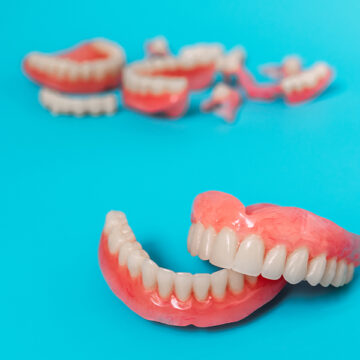
Conventional dentures sit over the gums and can be taken out for daily cleaning and care. A fixed implant-supported arch is secured to dental implants and does not rely on the gums alone for stability during everyday function.
That added support can reduce movement while eating or speaking, but implants are not automatically the right choice for everyone. Health, bone availability, hygiene needs, treatment time, and cost all influence the decision.
Patients comparing the two can explore modern teeth replacement options with Dworkin Dental before choosing an approach.
The Full-Arch Restoration Procedure
The full-arch dental implants procedure starts with a comprehensive examination and treatment plan. Imaging may be used to assess the jawbone and determine possible implant positions.
If remaining teeth cannot be preserved, tooth extraction may form part of the treatment plan. The implants are then placed in selected areas of the jaw. Depending on implant stability and other clinical factors, a temporary prosthesis may sometimes be attached during the initial treatment phase.
As healing progresses, the implants integrate with the jawbone, providing support for the replacement teeth. Once the area is ready, the definitive prosthesis can be designed, fitted, and adjusted for your bite.
Local anesthesia is used during implant surgery, and comfort options can be discussed before treatment. Soreness, swelling, or tenderness can occur afterward, with the amount and duration varying by patient and procedure.
Full-Arch Dental Implants Cost
The cost of full-arch dental implants cannot be accurately determined from an online average because no two treatment plans are identical.
Pricing may vary according to the number and type of implants, whether extractions or bone-related procedures are needed, restorative materials, laboratory requirements, temporary restorations, and overall case complexity. For that reason, the average cost of full-arch dental implants found online may not reflect what your treatment will require.
Dental insurance may contribute toward certain parts of care depending on your plan and benefits. Dworkin Dental also provides financing options. During your consultation, the team can review your proposed treatment and provide a personalized estimate.
Learn more about insurance and financing before your appointment.
Why Choose Dworkin Dental for Full-Arch Restoration in Milford, CT?
Searching for “full-arch dental implants near me” is only the beginning of choosing treatment. Full-arch care requires detailed evaluation, restorative planning, and continued maintenance.
At Dworkin Dental in Milford, your treatment begins with an individualized assessment rather than a predetermined implant package. Schedule a consultation to discuss whether full-arch restoration fits your oral health, functional needs, and long-term goals.
Full-Arch Restoration FAQs
Small food particles and plaque can collect around or beneath an implant-supported prosthesis, depending on its design. Daily cleaning around the implants and beneath accessible areas of the restoration is important. Your dental team can recommend appropriate floss, interdental cleaners, or other hygiene aids.
Implants and the prosthesis they support do not necessarily have the same lifespan. Long-term outcomes depend on factors including oral hygiene, gum and bone health, smoking, bite forces, medical conditions, restorative materials, and professional maintenance. Over the years, certain parts of the implant-supported restoration may need to be adjusted, repaired, or replaced.
Initial soreness and swelling generally occur during the early healing period, but integration of the implants with the jawbone takes considerably longer. The overall timeline can span several months and varies according to implant stability, bone condition, additional procedures, and individual healing.
Coverage varies by dental plan. Some policies may contribute toward particular stages of treatment while excluding or limiting other components. Dworkin Dental can help you review available benefits, but your insurer determines final coverage.
In selected cases, implants and a temporary fixed restoration may be placed during the same treatment phase. This is often referred to as immediate loading. It does not mean the entire biological healing process or final restoration is completed in one day. Eligibility depends on bone quality, implant stability, health factors, and the planned prosthesis.
Ready to find out whether full-arch treatment is appropriate for you? Book a consultation with Dworkin Dental in Milford, CT.
Other Services