All-on-4 Dental Implants in Milford, CT
Living with extensive tooth loss or several failing teeth can make chewing, speaking, and feeling comfortable with your smile more difficult. For some patients, replacing an entire upper or lower arch does not require a separate implant for each missing tooth.
At Dworkin Dental, we offer All-on-4 in Milford, CT, as a full-arch tooth-replacement option for eligible candidates. Four strategically positioned implants support a fixed set of replacement teeth. Before recommending treatment, our dentists evaluate your oral health, remaining teeth, jawbone, bite, and treatment goals to determine whether this approach is suitable for you.
Why Choose Dworkin Dental for All-on-4 in Milford, CT?
Full-arch implant treatment requires careful diagnosis and planning. Dworkin Dental combines implant care with digital technology, including CBCT imaging that provides detailed three-dimensional views of the teeth, jaws, and surrounding structures. Sedation options are available at our Milford practice when appropriate to help patients remain more comfortable throughout dental treatment. Treatment is planned around your oral health, anatomy, and specific restorative needs.
What Is All-on-4 Treatment?
All-on-4 dental implants use four implants placed at planned positions in the jaw to support a fixed full-arch prosthesis. The prosthesis restores an entire dental arch while using a limited number of implants for support.
How many teeth are typically included in an All-on-4 prosthesis? There is no universal number of replacement teeth because the prosthesis is designed to fit the patient’s anatomy, bite, and restorative plan.
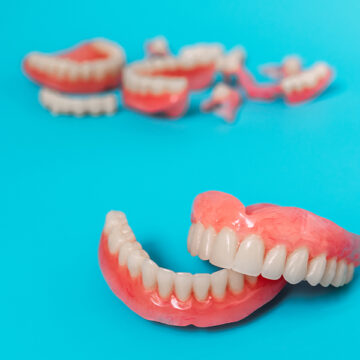
Unlike a conventional removable denture, the full-arch restoration is secured to implants and is not routinely removed by the patient.
Benefits of Choosing All-on-4
For someone who has lost most or all of the teeth in an arch, this approach can provide stable support without placing an implant for every missing tooth. Some eligible patients may receive temporary fixed teeth immediately after implant placement, depending on implant stability and the planned treatment approach.
Other potential benefits include improved chewing stability, a restoration that complements facial and smile characteristics, and freedom from a traditional removable denture.
Are All-on-4 dental implants permanent? The implants are intended to remain integrated with the jaw long-term, but the attached prosthesis may eventually require maintenance, repair, or replacement.
Am I a Candidate for All-on-4?
This approach may be appropriate when an upper or lower arch has several missing or failing teeth and the patient is interested in a fixed solution instead of conventional removable dentures.
Candidacy depends on several factors, including jawbone anatomy, gum health, remaining teeth, medical history, smoking status, medications, and the ability to heal after implant surgery. A clinical examination and appropriate imaging help determine whether four implants can provide suitable support or whether another treatment design would be preferable.
There is no single upper age at which someone automatically becomes too old for dental implants. Overall health, oral condition, healing capacity, and individual risk factors are more relevant than age alone.
The All-on-4 Treatment Process
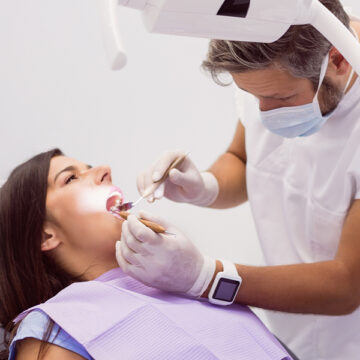
Treatment starts with a consultation and detailed evaluation. Your dentist examines the teeth and gums, reviews relevant health information, evaluates your bite, and uses diagnostic imaging as appropriate to assess available bone and plan implant positions.
If All-on-4 is suitable, the next stages may include:
- Treatment planning: Implant positions and the design of your new teeth are determined by your anatomy and restorative needs.
- Preparation: Teeth that cannot be retained may need to be removed. Bone or gum procedures may also be recommended when clinically necessary.
- Implant placement: Four dental implants are positioned within the jawbone to support the full-arch restoration.
- Provisional restoration: When implant stability and other clinical conditions allow, temporary fixed teeth may be connected during the initial treatment phase.
- Healing and final restoration: The implants are given time to integrate with the surrounding bone. After healing, the definitive prosthesis is made and adjusted for fit, bite, appearance, and function.
How painful are All-on-4 dental implants? Local anesthesia is used during implant surgery, and sedation may be available when appropriate. Soreness, swelling, and tenderness can occur afterward, and your dental team will provide instructions to help you manage the recovery period.
All-on-4 vs. Traditional Implants and Dentures
Choosing a tooth-replacement approach involves considering how many teeth are absent, the condition of the remaining teeth and jawbone, relevant health factors, and your personal goals.
A single implant generally replaces one missing tooth, while several implants may support bridges when multiple teeth are absent. All-on-4 is designed specifically for full-arch replacement using four supporting implants. A conventional denture replaces an arch without surgically placed implant support and remains removable.
What’s better than All-on-4 implants? There is no universally better option. Some patients may benefit from a different number or distribution of implants, an implant-supported removable prosthesis, conventional dentures, or another restorative approach. Your examination determines which design offers an appropriate balance of function, maintainability, anatomy, and cost.
All-on-4 Cost in Milford, CT
All-on-4 dental implant costs vary considerably because full-arch cases do not all involve the same procedures or materials. Cost estimates for All-on-4 treatment can vary widely, so general online pricing may not reflect what you will pay for your individual care.
Your total can be affected by extractions, imaging, sedation, bone procedures, implant components, provisional teeth, and the material selected for the definitive restoration. Dworkin Dental offers flexible payment options. After your evaluation, our team can explain the proposed treatment and provide pricing based on your individual plan.
FAQs
Implants are intended as a long-term tooth-replacement solution, but their lifespan cannot be predicted for an individual patient. Oral hygiene, gum and bone health, smoking, bite forces, health conditions, maintenance visits, and prosthesis wear can all influence longevity. The restoration attached to the implants may require repair or replacement over time.
Small food particles can collect beneath or around a full-arch prosthesis. Cleaning around the implants and underneath the restoration is therefore important. Your dental team can demonstrate suitable brushes, flossing aids, or other hygiene tools for your specific prosthesis.
Diet progresses according to healing and implant stability. Patients are commonly instructed to follow a soft diet during the early healing period and to avoid applying excessive force to a provisional restoration. Your dentist will tell you when and how to reintroduce firmer foods based on your recovery.
Treatment involves surgery and may include temporary swelling, soreness, bruising, or dietary restrictions. Other considerations include cost, the need for careful daily cleaning, ongoing professional maintenance, and the possibility of biological or mechanical complications. Not every patient is an appropriate candidate.
Research generally reports high implant survival for full-arch treatment, but a single percentage cannot predict an individual's result. Outcomes vary with follow-up period, patient health, smoking, bone quality, oral hygiene, implant position, loading, and other clinical factors. Your dentist can discuss risks specific to your case.
Schedule Your All-on-4 Consultation
If you are looking for “all-on-4 dental implants near me” to address missing or failing teeth, a personalized evaluation can help you understand whether this treatment is appropriate. Schedule a consultation with Dworkin Dental in Milford to discuss your oral health, candidacy, treatment alternatives, expected timeline, and personalized cost before deciding how to proceed.
Other Services